North India · Groundnut oil
Punjabi Samosa
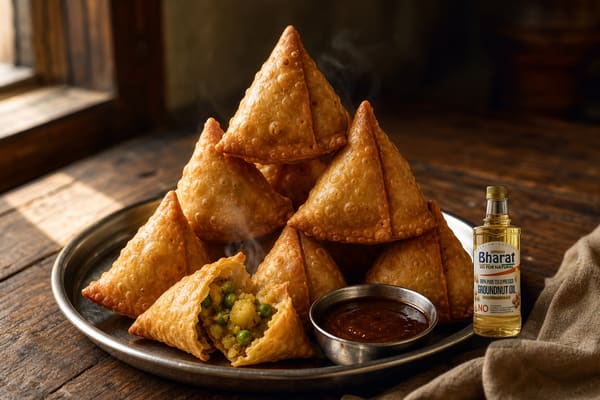
Bakery-style Punjabi samosas — flaky ajwain pastry, dry-spiced potato-pea filling, double-fried in cold-pressed groundnut oil for the blistered shell.
Ingredients
- 300 g maida (all-purpose flour)
- 60 g ghee
- 1 tsp ajwain (carom seeds)
- 1 tsp salt
- 500 g potatoes
- 100 g green peas
- 1 tbsp coriander seeds
- 1 tsp cumin seeds
- 1 tsp garam masala
- 1 tsp amchur (dry mango powder)
- 2 green chillies
- 1 tbsp ginger
- 750 ml Bharat cold-pressed groundnut oil
A pastry project, not a snack hack
A proper samosa is a pastry project: a stiff ghee-rubbed dough rested twice, a dry potato filling with whole coriander seed, and a first fry so slow the surface blisters before it colours. Groundnut oil is the traditional fryer’s choice — it holds thirty minutes of low-heat frying without breaking, and leaves the shell tasting of pastry, not of oil.
The two mistakes that flatten a home samosa are a soft dough and a hot first fry. The dough should feel almost too stiff to knead — that tightness is what stops it puffing like a puri. And the first fry belongs at a temperature that feels wrong to anyone who fries pakoras: barely murmuring, small slow bubbles, no colour for the first ten minutes. That patience is the entire difference between a bakery shell and a bubbled one.
Method
-
Make the dough. Rub the cold ghee into the maida, ajwain, and salt until the mixture holds a fist-print when squeezed. Add water a spoon at a time — you want a stiff, tight dough that takes real effort to bring together. Rest it 30 minutes under a damp cloth.
-
Cook the filling. Temper the cumin and cracked coriander seed in a spoonful of groundnut oil. Add the ginger and green chilli, then the crumbled potato and peas. Season with garam masala, amchur, and salt. Cook the filling dry — no water at any point — and cool it completely before shaping. A warm filling steams the pastry from inside and the shell goes soft.
-
Shape the cones. Divide the dough into six balls. Roll each to an oval, halve it crosswise, wet the straight edge, and fold into a cone. Fill three-quarters full, pleat the back seam, and press firmly closed. The pleat is not decoration — it is the seal that keeps the fry-oil out.
-
First fry, low and slow. Heat the Bharat groundnut oil to 150°C — a cube of dough should sink, sit, and rise lazily. Slide the samosas in and hold the oil low for 12–15 minutes, until the shells are blistered and pale gold. Low heat is what makes the crust flaky instead of bubbly; resist the urge to turn the flame up.
-
Second fry to finish. Raise the oil to 180°C and fry 2–3 minutes to a deep gold. Drain on a rack, never on paper — steam is the enemy of the shell. Serve hot with imli chutney, or the next morning with chai, when the spices have settled into the potato.
Why groundnut oil
A samosa spends longer in the oil than almost anything else an Indian kitchen fries, at a lower temperature than almost anything else. That long, low bath is exactly the work cold-pressed groundnut oil is built for: it stays stable across the slow first fry, takes the 180°C finish without smoking, and its gentle nuttiness reads as depth in the pastry rather than as a flavour of its own. Strained once cooled, the same oil will fry the next batch of masala vada or crispy kachori without complaint.
In the making
The oil, the heat, the finish.
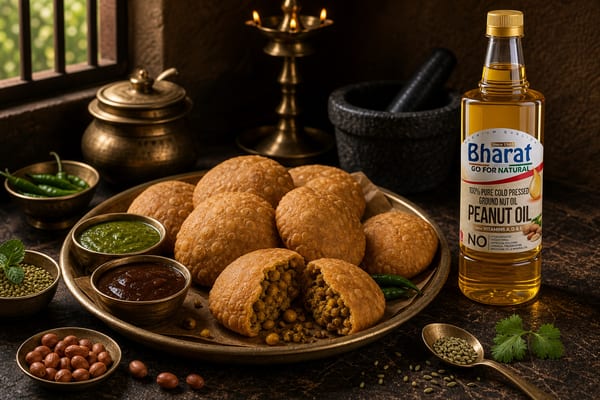
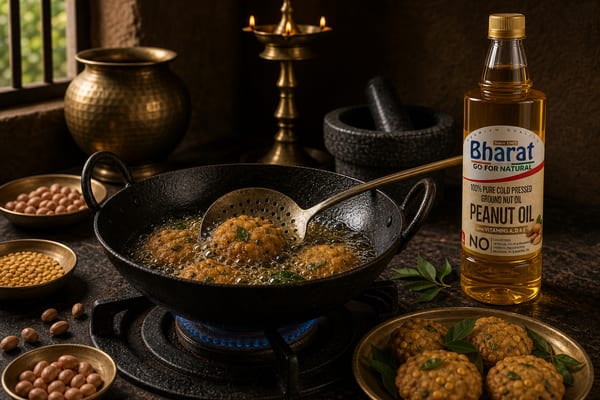
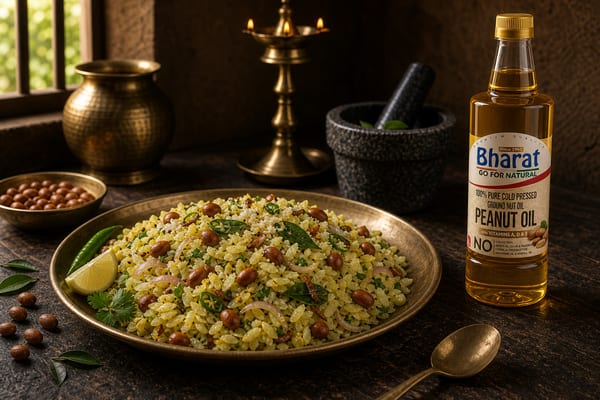
The oil for this dish
Bharat Groundnut Oil →
Light, high-smoke, the everyday oil of South and West Indian frying.