Tamil Nadu · Groundnut oil
Masala Vada
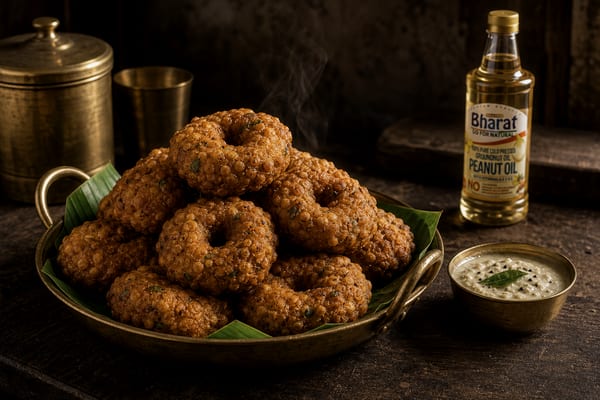
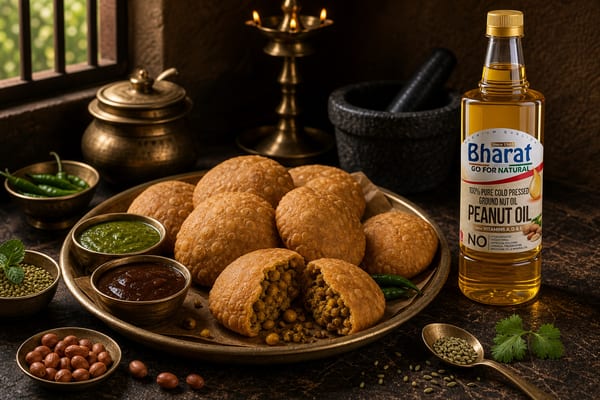
Crispy, peppery chana dal fritters from Tamil Nadu — deep-fried in groundnut oil until burnished gold, best eaten hot off the pan with coconut chutney.
Ingredients
- 1 cup chana dal (split chickpeas)
- 4 dried red chillies
- 1 tsp fennel seeds
- 1 tsp cumin seeds
- 1 tsp black peppercorns
- 1 medium onion
- 1 inch ginger
- 10 curry leaves
- 2 tbsp fresh coriander
- 1 tsp salt
- 500 ml Bharat groundnut oil
The crunch of the evening
Evening in Tamil Nadu smells of masala vada. The sizzle of the batter hitting hot oil is the signal that work is done and chai time is near. The vada must be crisp on the outside, tender within, and hot enough that the first bite demands a moment of waiting. The oil does not just cook the vada — it shapes its character.
Groundnut oil is the right choice here: clean, steady at frying temperature, and quiet enough to let fennel, pepper, onion, and curry leaves stay in front. It gives the batter time to cook through — the chana dal needs a full, even heat — without the surface darkening too quickly.
The dal
- Wash the chana dal thoroughly. Soak in plenty of water for 2 hours. The dal should swell but not lose its shape — the grains should still feel firm between the fingers.
- Drain completely. Spread on a kitchen towel to remove excess moisture. Wet dal makes the batter sticky and the vada dense.
The spice blend
- In a small pan, dry-roast the dried red chillies, fennel seeds, cumin seeds, and black peppercorns over low heat until fragrant — about 2 minutes. Let cool.
- Grind to a coarse powder. The aroma at this stage is the soul of the vada: warm, floral, and sharp.
The batter
- Transfer the drained chana dal to a food processor. Do not overfill — process in batches if needed.
- Add the ground spice powder and salt. Pulse until the dal is coarsely ground. The texture should be uneven — some grains fully broken, some still visible. Do not add water. If the mixture is too stiff to hold together, sprinkle one teaspoon of water and pulse again.
- Transfer to a mixing bowl. Add the diced onion, ginger, curry leaves, and coriander. Mix with your hands, squeezing the mixture gently until it holds together in a mass.
The fry
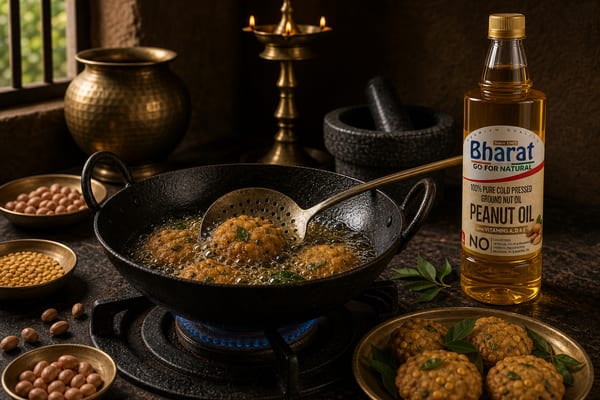
- In a deep kadhai or heavy pan, heat the Bharat groundnut oil to 170°C. A small piece of batter dropped into the oil should sink slightly, then rise immediately with a steady stream of bubbles.
- Wet your palms with water. Take a lime-sized portion of the batter and shape into a flat disc about 6 cm wide and 1.5 cm thick. The edges should be slightly thinner than the centre — this ensures even cooking.
- Slide the vada gently into the oil. Fry 4–5 vadas at a time — do not crowd the pan.
- Fry for 3 minutes on each side, turning once. The vada should be deep gold, not brown.
- Drain on paper towels. Serve immediately — masala vada waits for no one.
Notes from the kitchen
- The oil temperature is critical. If the oil is too cool, the vada absorbs oil and turns greasy. If too hot, the exterior darkens before the centre cooks through. Maintain a steady 170°C.
- Shaping the vada with wet palms prevents the batter from sticking and gives the vada a smooth surface.
- Masala vada is best eaten within fifteen minutes of frying. Cold, they lose their crunch. If you must reheat, use an oven at 180°C for 4 minutes — never a microwave.
- Serve with fresh coconut chutney and a cup of filter coffee. The combination — the peppery fritter, the cool coconut chutney, the strong coffee — is the afternoon ritual of a million Tamil kitchens.
In the making
The oil, the heat, the finish.
The oil for this dish
Bharat Groundnut Oil →
Light, high-smoke, the everyday oil of South and West Indian frying.