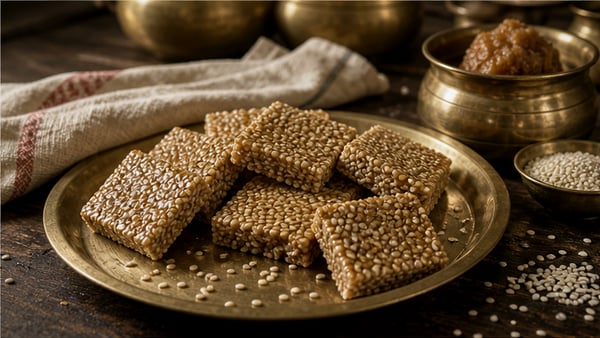
From the kitchen
Til chikki at home, in three ingredients
Sesame, jaggery, a teaspoon of cold-pressed sesame oil. A Sankranti tradition in a tin.
The Journal
Essays from the family. Technique from the kitchen. The cultural notes that come with sixty years of pressing oil for Indian households.
Sesame, jaggery, a teaspoon of cold-pressed sesame oil. A Sankranti tradition in a tin.
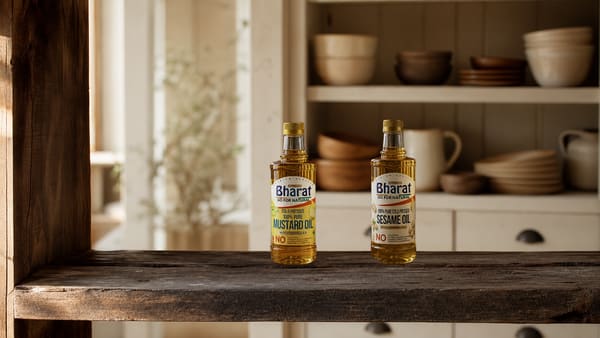
A kitchen guide to keeping mustard, sesame, groundnut and coconut oil fresh through Gulf summers — where to store the bottle, and what to watch for.
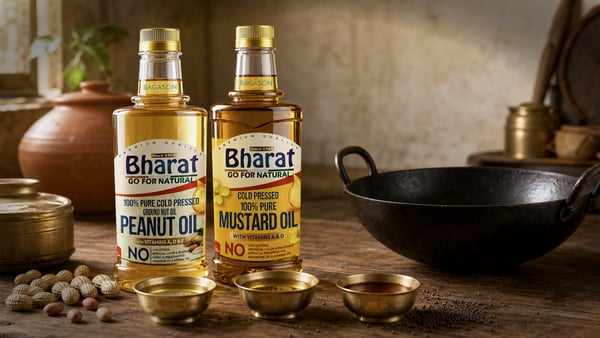
The three bottles most Indian kitchens argue about, compared the way a press would compare them — by seed, by heat, and by what they do to the food.
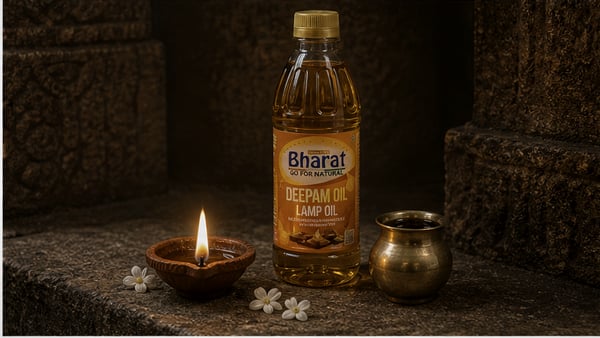
The clay diya, the brass lamp, the temple thali, and the oil that has always been their fuel.
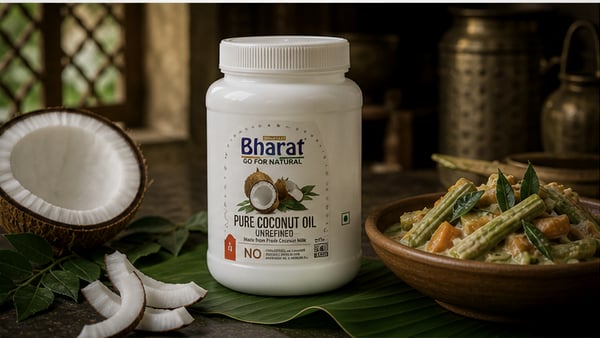
The avial is not a coconut-oil dish — except in the one moment that makes it one.
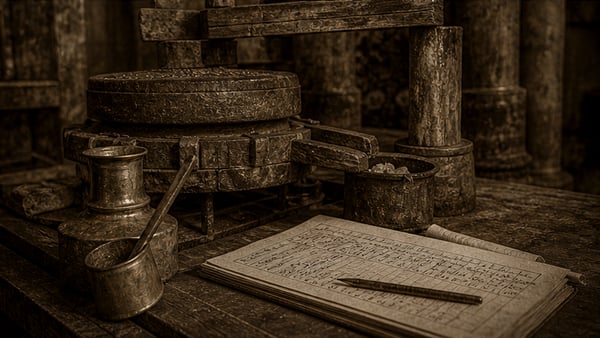
Each generation came to the press for a different reason. They all stayed.
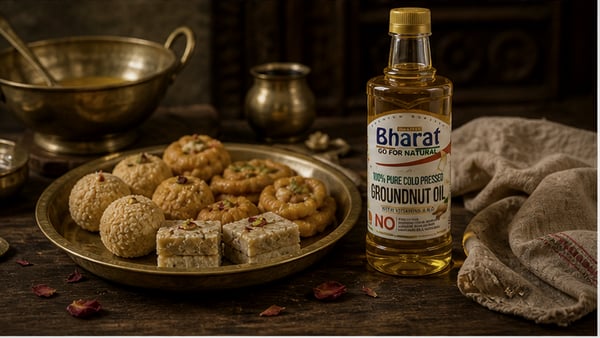
Mathri, gond ke ladoo, panjiri — the Karwa Chauth sweets that ask for groundnut, not ghee alone.
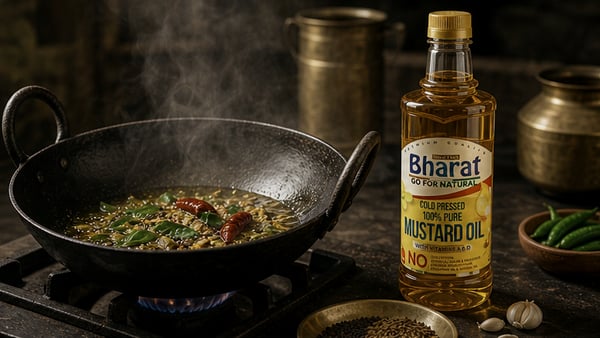
The first smoke, the second crackle, the third pour, the fourth rest. The Bengali way with mustard oil.
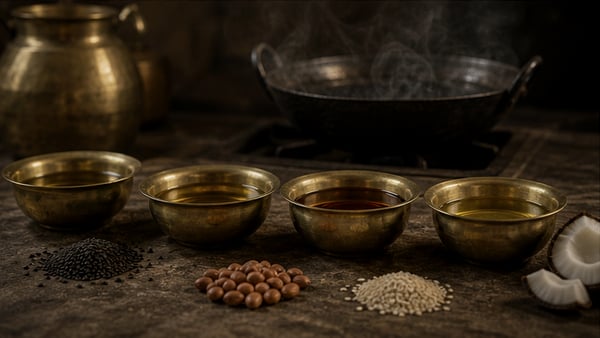
A practical guide to oil smoke points, written for the household kitchen and not the chemistry lab.
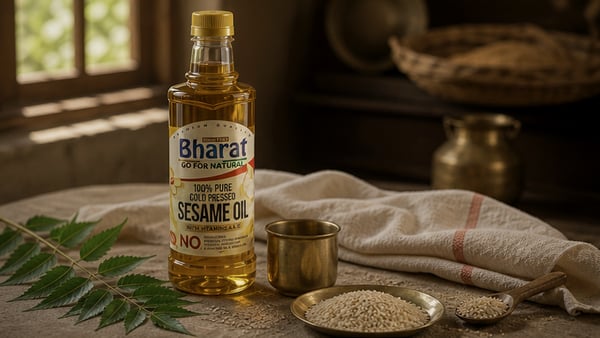
Gandusha. Kavala. The practice is older than the language we use to describe it. What it is, and what it isn't.
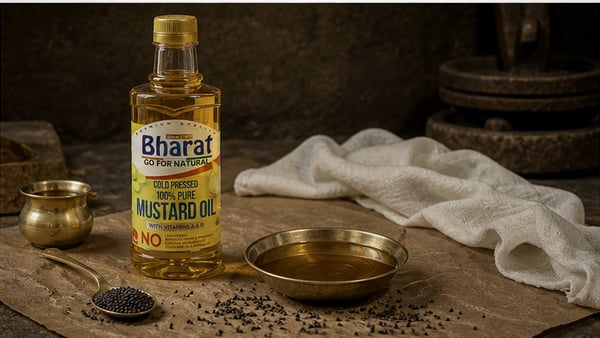
The most common food-fraud in Indian mustard oil, and the four tests a household can do at home.
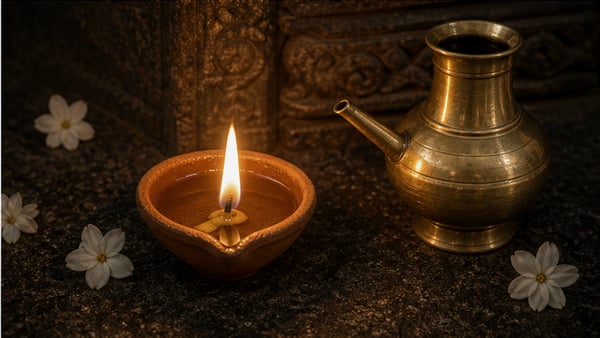
Paraffin, kerosene, mineral oil — none of these belong in a clay lamp. The diya is older than petroleum.
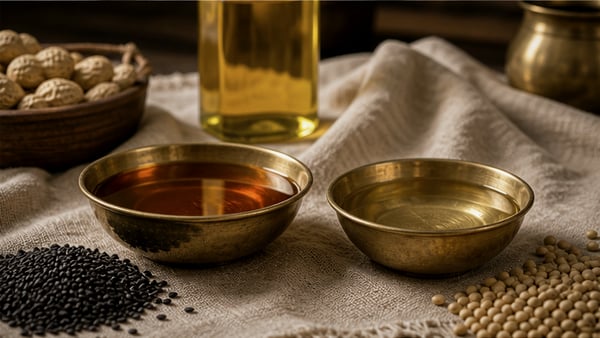
The two oils share a name and an ingredient. Nothing else.
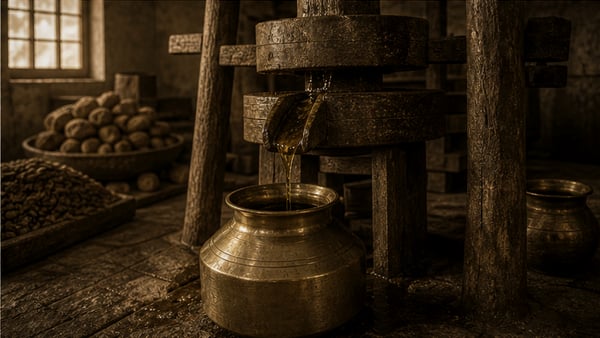
Sixty years of one family pressing oil — from a shed in Bareilly in 1965 to mills in Rajasthan and Kerala today. The press is the family. The family is the press.