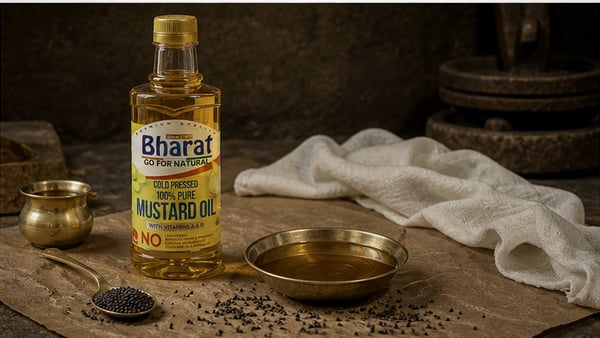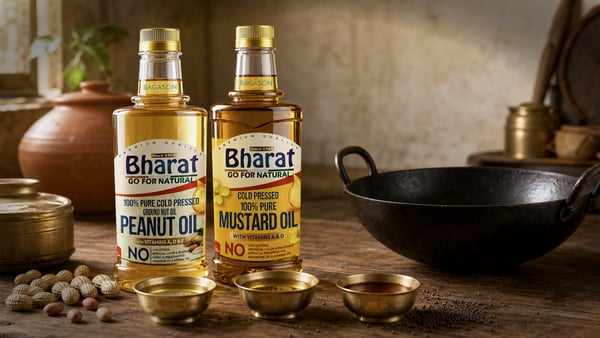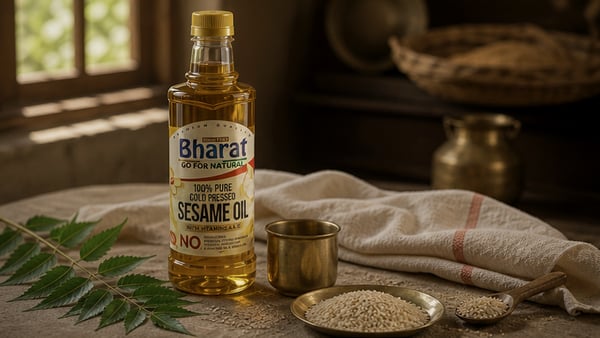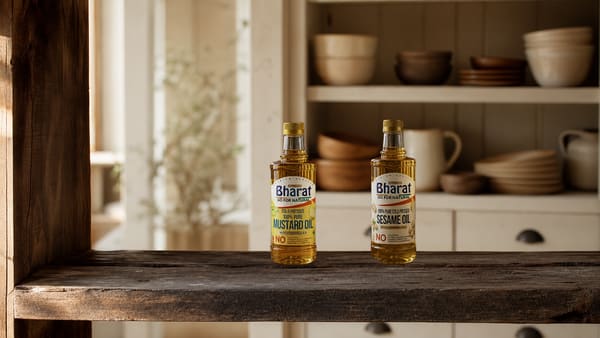
There is one part of moving a kachi ghani mustard oil habit to the Gulf that nobody’s grandmother had to plan for: the heat doesn’t stay outside. A Chennai or Amritsar kitchen has its hot months, but it also has nights, monsoons, and a larder that never quite matches the temperature of the stove. A Dubai or Abu Dhabi kitchen runs cold air on one side of the counter and close to 45°C sun through the window on the other, sometimes on the same shelf. Cold-pressed oil, which was never stripped of the compounds that make it smell and taste like something, notices that swing more than a refined bottle does.
None of this means the oil goes bad quickly, or that it needs special handling most home cooks don’t already have the tools for. It means the usual advice — “keep it in a cool, dark place” — needs translating into what a UAE kitchen actually offers. This is that translation.
Why cold-pressed oil is more sensitive to heat than refined
A refined oil has already had its volatile compounds — the ones that carry flavour, colour, and aroma — mostly stripped out during processing. What’s left is comparatively inert, which is exactly why it tastes like very little. A cold-pressed oil keeps those compounds. That’s the entire reason kachi ghani mustard oil tastes sharp and a wood-pressed groundnut oil tastes like the peanut it came from — and it’s also why heat, light, and time affect it faster. The same molecules that give the oil its character are the ones that oxidise first.
This isn’t a defect to engineer around. It’s simply what “unrefined” means, and it comes with one extra habit: the bottle needs a spot that isn’t next to a heat source.
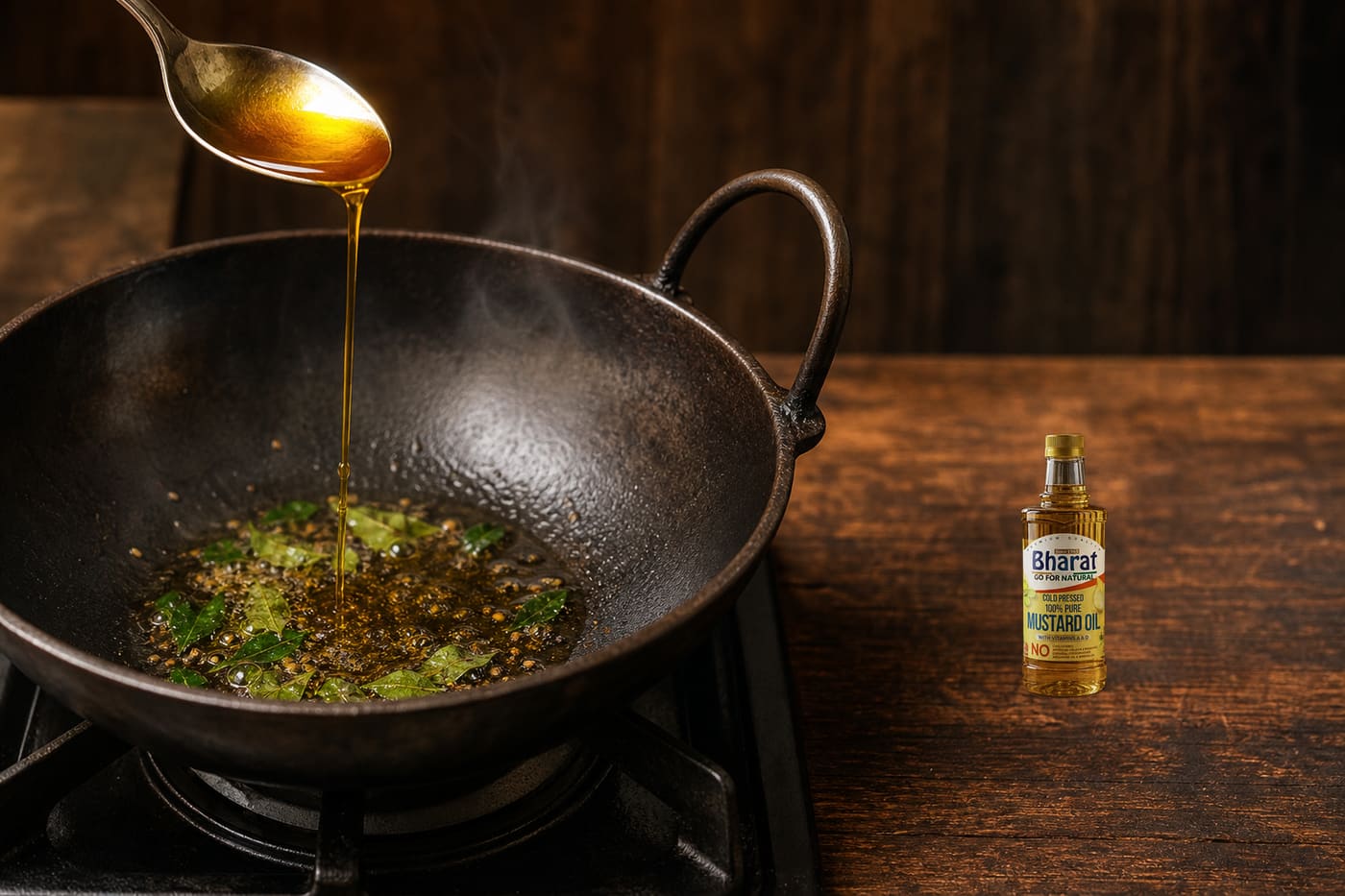
The three things working against the bottle
Three conditions speed up how quickly any pressed oil turns — and a UAE kitchen has more of at least two of them than most Indian kitchens do.
Heat
Every few degrees above room temperature accelerates oxidation. A cupboard directly above the stove, beside the oven, or backed onto a sun-facing window can sit noticeably warmer than the rest of the kitchen — warm enough that a bottle kept there ages faster than the same bottle kept in a shaded cupboard three feet away.
Light
Sunlight, and to a lesser extent bright kitchen LEDs left on for hours, break down oil compounds directly. This is the actual job the amber glass is doing on a Bharat bottle — cutting the UV and visible light that reaches the oil, not just carrying a shade for the label’s sake. A clear plastic decanting jar undoes that work.
Air
Every time the cap comes off, a little oxygen gets in, and oxygen is what “oxidation” is reacting with. A bottle that’s opened dozens of times a day for tadka loses more of its freshness to air exposure than one poured from twice. Pouring quickly and capping promptly matters more than people assume.
Where to actually keep the bottle
In practice, this means a UAE kitchen usually has one good spot and two bad ones.
- Good: an enclosed cupboard or pantry shelf that doesn’t share a wall with the oven or hob, and isn’t hit by window light through the day. Most under-counter cabinets away from the cooking zone qualify.
- Bad: the open shelf directly above or beside the stove, where residual heat and steam collect even when the burner is off.
- Bad: the windowsill or a glass-fronted cabinet in direct sun — a common styling choice for a handsome bottle, but the worst spot for the oil inside it.
If the only sensible cupboard is a warm one — not unusual in smaller apartment kitchens — buy the smaller bottle size and plan to finish it faster, rather than keeping a large tin somewhere it will sit warm for months.
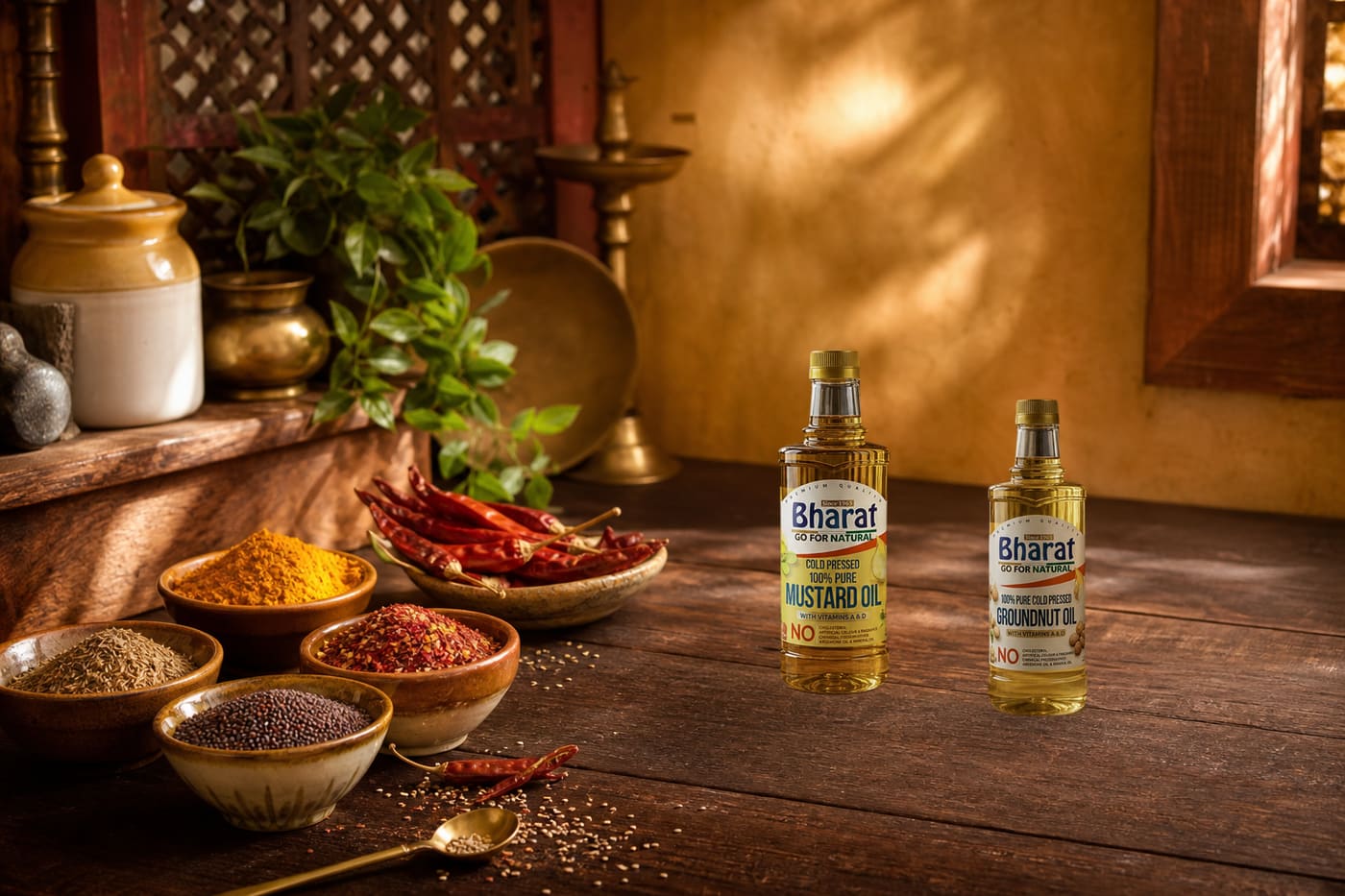
Coconut oil’s UAE quirk: it will freeze and melt, and that’s normal
Coconut oil solidifies below roughly 24°C and turns liquid again above it — a property of the oil itself, not a sign of anything going wrong. In most of India this happens once a year, around winter. In a UAE home running air conditioning at 21–23°C, it can happen daily: solid in the fridge or a cold kitchen, liquid the moment it’s left on a warm counter.
Cook with it either way — melt a solidified jar by standing it in warm water for a few minutes, or simply spoon out what’s needed. What does matter is the freeze-thaw cycle itself doesn’t harm the oil; only heat, light, and repeated air exposure do. Treat the solid-to-liquid switch as cosmetic, not a storage failure.
Reading the bottle: what’s normal and what isn’t
A little seasonal cloudiness in coconut oil, or mustard oil looking slightly thicker on a cold AC morning, is expected and reverses on its own. What actually signals a bottle has turned is different, and it’s a smell-and-taste check rather than a look-at-it check:
- A flat, waxy, or faintly “crayon-like” smell in place of the oil’s usual sharpness (mustard) or roasted note (groundnut, sesame) or coconut fragrance.
- A taste that reads bitter or stale rather than pungent or nutty.
- Any smell that’s noticeably duller than when the bottle was first opened, even without an obvious “off” note — pressed oils fade before they spoil outright, and fading is the earlier warning.
If any of that shows up, the oil is still safe in the ordinary sense, but it’s no longer doing the job a fresh-pressed oil is bought for, and it’s time to finish the bottle in something forgiving — a batch of achaar or a deep fry — rather than a tadka where the oil’s own flavour is the point.
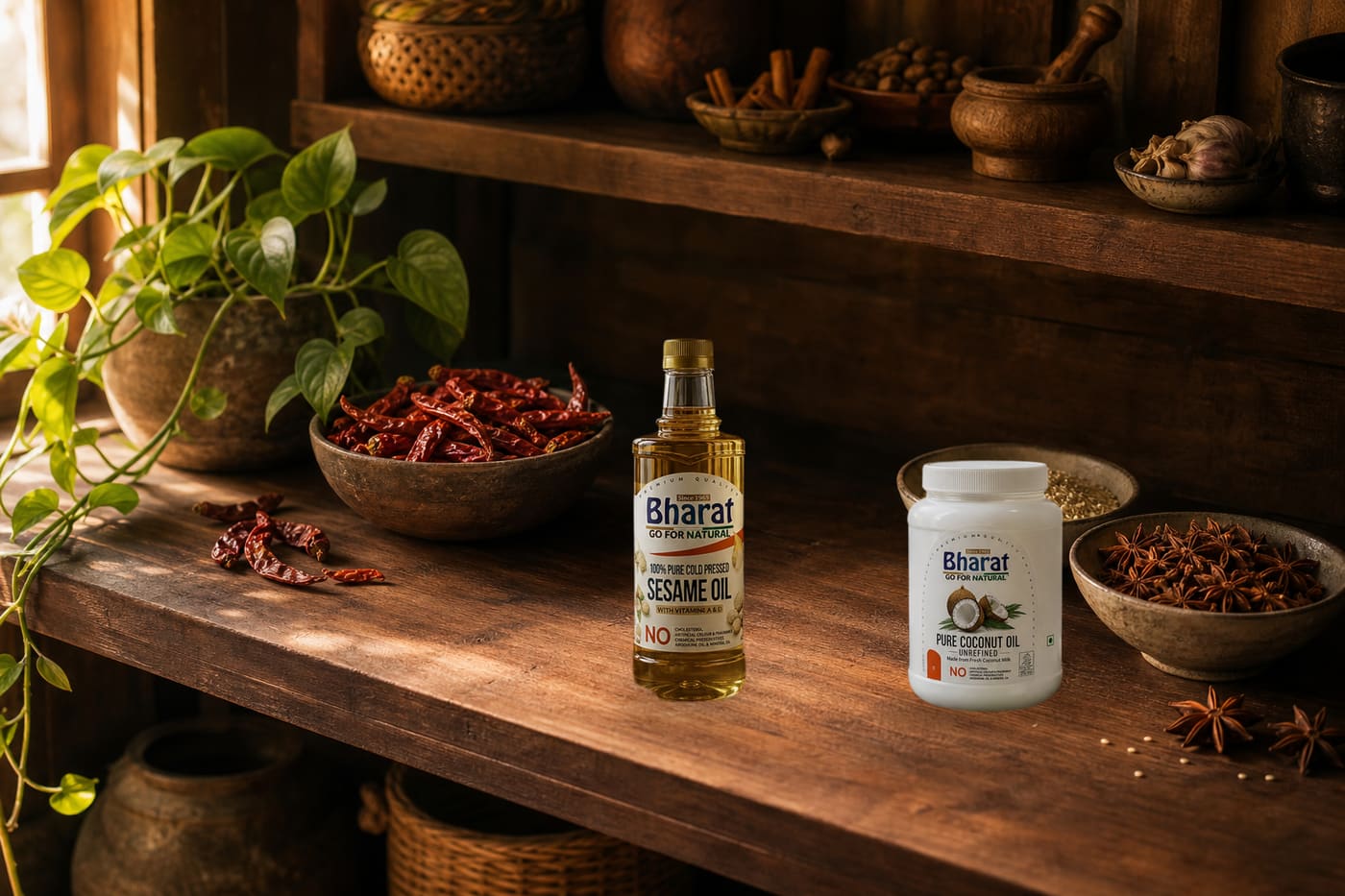
A simple summer routine
For most UAE kitchens, freshness comes down to four habits rather than any special equipment:
- Keep the everyday bottle in an enclosed cupboard away from the stove and any window — not on open, sun-facing shelving.
- Buy the size you’ll finish in a season during peak summer, rather than a large tin that sits warm for months.
- Pour quickly, cap promptly, and avoid leaving the bottle open on the counter while cooking.
- Trust smell and taste over appearance — cloudiness and thickening from AC temperature swings are cosmetic; a dulled or waxy smell is the real signal to use it up.
None of this is more work than any other pantry staple already gets. It’s simply matching the habit to the climate the bottle is actually living in.
Explore the full range of cold-pressed oils or find where to buy Bharat oils near you.