Gujarat · Groundnut oil
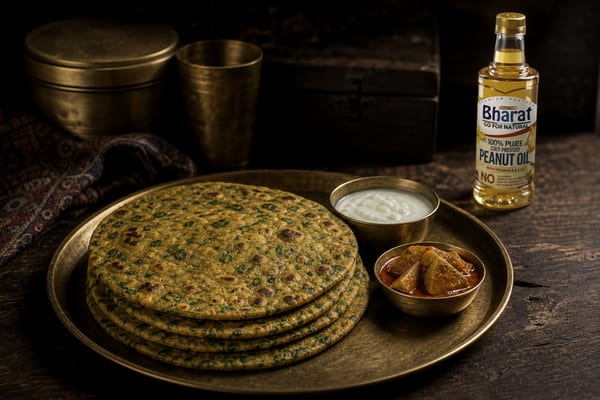
Methi Thepla
The Gujarati fenugreek flatbread that travels — whole wheat dough kneaded with fresh fenugreek leaves, spices, and groundnut oil, griddled to golden.
Ingredients
- 2 cups whole wheat flour (atta)
- 1 cup fresh methi (fenugreek leaves)
- 3 tbsp yogurt
- 3 tbsp Bharat groundnut oil · plus extra for the griddle
- 1 green chilli
- 1 tsp ginger
- 1/2 tsp turmeric powder
- 1/2 tsp red chilli powder
- 1 tsp cumin seeds
- 1 tsp salt
- 1/2 tsp sugar
The bread that packs
In every Gujarati household, a stack of theplas sits wrapped in a cloth on the kitchen counter. They are the travelling food of the state — carried to school in lunchboxes, packed for train journeys, eaten on pilgrimages to Palitana and Ambaji. They taste as good at room temperature as they do fresh off the griddle.
Methi thepla is the most beloved variation. The bitterness of fresh fenugreek is mellowed by the warmth of turmeric and cumin, and the groundnut oil in the dough performs a quiet miracle: it keeps the thepla soft for hours. A thepla made without oil in the dough will turn stiff and brittle within an hour. With groundnut oil, it stays supple all day.
The dough
- Wash the chopped methi leaves and spread them on a kitchen towel to dry slightly. Wet leaves will make the dough sticky.
- In a large mixing bowl, combine the whole wheat flour, salt, sugar, turmeric, red chilli powder, and cumin seeds.
- Add the chopped methi, minced green chilli, and grated ginger.
- Make a well in the centre. Add the yogurt and 2 tablespoons of Bharat groundnut oil.
- Mix with your fingers, rubbing the oil and yogurt into the flour, until the mixture resembles coarse crumbs.
- Add water, one tablespoon at a time, and knead to a firm, smooth dough. The methi leaves will release some moisture — you may need less water than usual.
- Drizzle the remaining 1 tablespoon of groundnut oil over the dough and knead again. Cover and rest for 20 minutes.
The rolling
- Divide the dough into 8 equal balls. Keep them covered under a damp cloth.
- Heat a tawa or flat griddle over medium heat.
- Take one ball, dip it in dry whole wheat flour, and roll into a circle about 15 cm in diameter. The dough should roll easily — if it resists, it needs more rest.
- Slap the rolled thepla between your palms (a Gujarati habit that loosens the layers), then lay it on the hot tawa.
The griddle
- Cook the thepla for 30 seconds, until small bubbles appear on the surface. Flip.
- Brush the cooked side with a few drops of Bharat groundnut oil. Flip again and brush the other side.
- Press gently with a spatula — the thepla will puff in places. Cook each side until golden-brown spots appear, about 45 seconds per side.
- Stack on a plate and cover with a clean cloth. The residual steam will keep them soft.
Notes from the kitchen
- Methi thepla is never eaten plain. Serve with a dollop of salted butter, a spoonful of mango pickle, and a side of sweet masala chai. The combination of bitter methi, sour pickle, and hot tea is the taste of a Gujarati breakfast.
- The spice balance can be adjusted — add more green chilli for heat, more cumin for warmth, a pinch of sugar for sweetness.
- Theplas freeze exceptionally well. Stack with parchment between each, wrap tightly, and freeze for up to three months. Reheat on a hot tawa for 30 seconds per side.
- If fresh methi is unavailable, use dried kasuri methi — reduce the quantity to ¼ cup and soak in warm water for 10 minutes before use.
In the making
The oil, the heat, the finish.
The oil for this dish
Bharat Groundnut Oil →
Light, high-smoke, the everyday oil of South and West Indian frying.