Kerala · Coconut oil
Kadala Curry
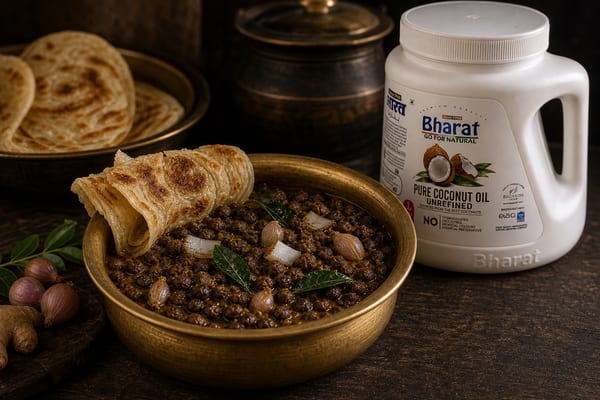
Kerala's black chickpea curry — slow-simmered with coconut, black pepper, and a coconut oil tadka of curry leaves, shallots, and cinnamon. The breakfast companion of porotta and appam.
Ingredients
- 1 cup black chickpeas (kadala)
- 1/2 cup fresh coconut
- 8 shallots
- 4 garlic cloves
- 1 inch ginger
- 3 dried red chillies
- 1 tsp black peppercorns
- 1 tsp cumin seeds
- 1 tbsp coriander powder
- 1/2 tsp turmeric powder
- 2 sprigs curry leaves
- 1 inch cinnamon stick
- 2 green chillies
- 3 tbsp Bharat coconut oil
- salt
- 3 cups water
The curry that starts the day
In a Kerala home, Sunday morning means appam and kadala curry. The appam is lacy-edged and soft-centred, and the curry is thick, dark, and peppery — black chickpeas cooked until they yield completely, swimming in a coconut-based gravy that has been coaxed into richness over a slow flame.
The oil used for the tadka is not an afterthought. In Malabar kitchens, coconut oil carries curry leaves, shallots, and warm spices without hiding the chickpea and coconut beneath. Its aroma belongs to the dish before the first spoon reaches the table.
The chickpeas
- Soak the black chickpeas in plenty of water overnight — at least 8 hours. They will triple in volume.
- Drain, rinse, and transfer to a pressure cooker. Add 2 cups of fresh water and 1/2 teaspoon of salt. Pressure cook for 6 whistles, or until the chickpeas are tender but still holding their shape. The skin should slip off a chickpea when pressed lightly between thumb and finger.
- Do not drain the cooking liquid — it carries the chickpeas’ flavour and will form the base of the gravy.
The coconut paste
- While the chickpeas cook, dry-roast the grated coconut in a pan over low heat, stirring constantly, until it turns a pale gold and smells fragrant — about 5 minutes.
- Transfer to a blender. Add 4 shallots, the garlic, ginger, 2 dried red chillies, black peppercorns, and cumin seeds. Add 1/4 cup of warm water and grind to a smooth paste. The paste should be thick enough to hold its shape.
The curry
- In a heavy-bottomed pot, heat 1 tablespoon of Bharat coconut oil over medium heat.
- Add the coriander powder and turmeric. Stir for 20 seconds — the spices will darken slightly and release their aroma.
- Add the cooked chickpeas along with their cooking liquid. Add 1 cup of warm water — the gravy should be thick but pourable.
- Add the coconut paste. Stir well. Bring to a gentle simmer, then reduce the heat to low.
- Cook uncovered for 25 minutes, stirring occasionally. The gravy will thicken and darken. The chickpeas will soften further and start to release their starch into the gravy.
The tadka
- In a small tadka pan, heat 2 tablespoons of Bharat coconut oil.
- Add the remaining 4 shallots, thinly sliced. Fry until they turn deep gold — about 3 minutes.
- Add the cinnamon stick, the remaining dried red chilli (broken), the green chillies (slit), and a sprig of curry leaves. Let them crackle for 15 seconds.
- Pour the entire tadka over the simmering curry. Do not stir. Let it settle for 2 minutes.
- Stir once, gently, just before serving.
Notes from the kitchen
- Kadala curry needs time. If the chickpeas are undercooked, the curry will lack body. If the gravy is not simmered long enough, the coconut and spices will taste raw. There is no shortcut.
- The curry thickens as it cools. Add a splash of warm water when reheating.
- Serve with soft appams, fluffy porotta, or steamed red rice. The curry should be spooned generously — it is meant to soak into the bread and rice.
- The same curry, made one day ahead and reheated, tastes deeper and more complex. Refresh the coconut oil tadka just before serving to bring back the brightness.
In the making
The oil, the heat, the finish.
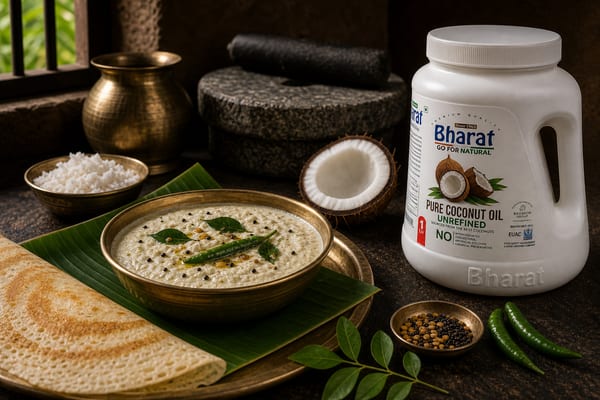
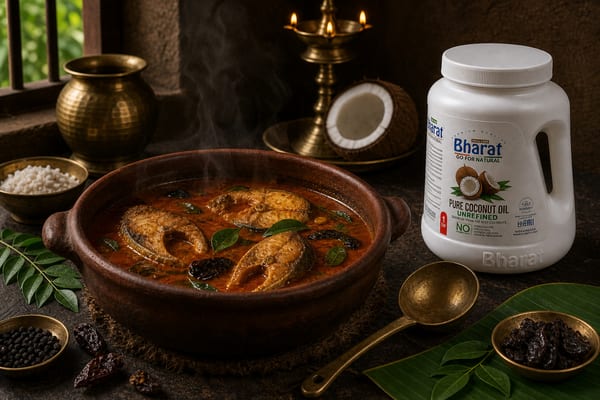
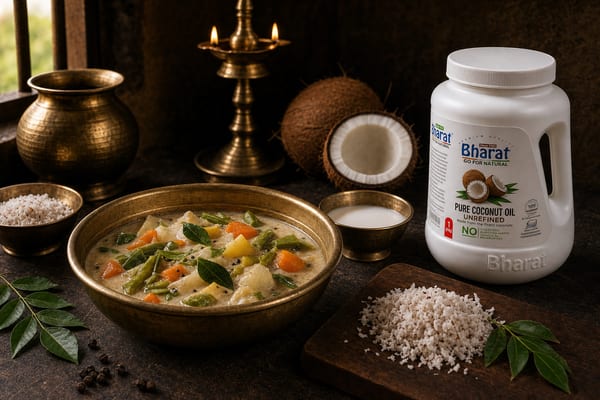
The oil for this dish
Bharat Coconut Oil →
Pressed from sun-dried copra. The oil of Kerala, Konkan, and the South.